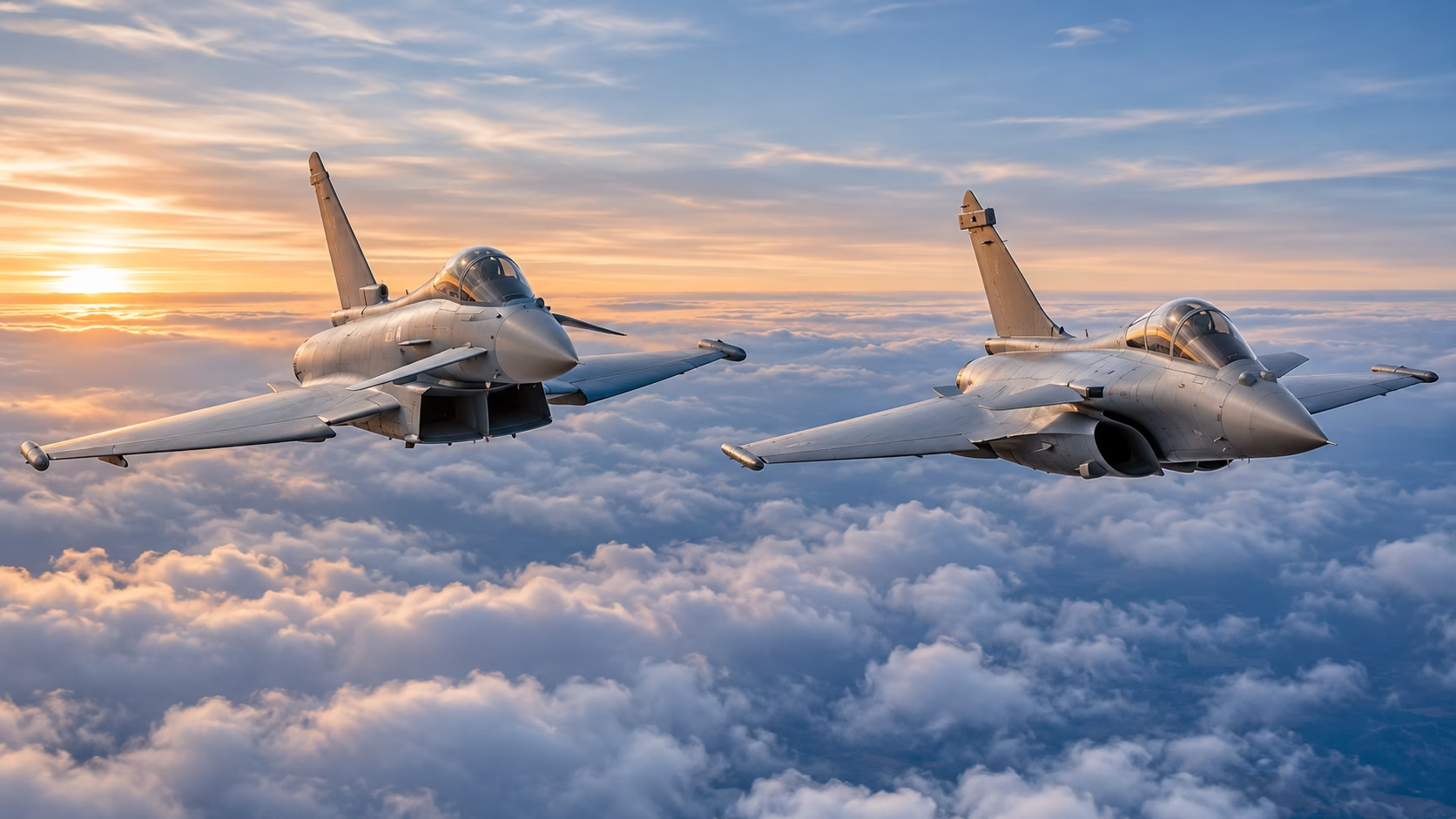
Two European Fighter Jets. Two Engineering Philosophies. Which Is Superior?
Reading time: 10–12 minutes
Introduction: A European Engineering Rivalry
Few modern fighter aircraft generate as much interest among aviation enthusiasts and defence engineers as the Eurofighter Typhoon and the Dassault Rafale.
Both are twin-engine, highly manoeuvrable, multirole combat aircraft developed in Europe. Both combine advanced aerodynamics, sophisticated flight-control systems, powerful radar technology and an extensive range of modern weapons.
However, their development histories reveal two different engineering philosophies.
The Eurofighter Typhoon was developed through a multinational European partnership involving the United Kingdom, Germany, Italy and Spain. Its original design priorities placed particular emphasis on air superiority, exceptional agility and high-speed performance.
The Rafale, developed independently by French manufacturer Dassault Aviation, was designed around the concept of an omnirole fighter: an aircraft capable of performing multiple mission types, including air defence, reconnaissance, precision strike and nuclear deterrence.
Both aircraft have evolved significantly since entering service. But which offers the better combination of performance, technology, versatility and operational capability?
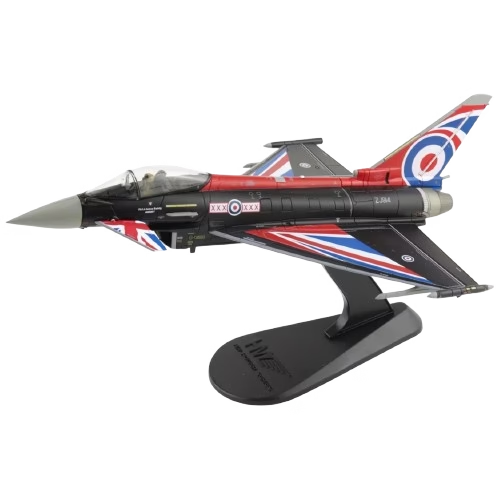
A 1/72 scale premium diecast model aircraft of a Eurofighter Typhoon.
“Blackjack” ZJ914, RAF, 2021 (w/generic box, 2 x empty pylon, 1 x center fuel tank).
A 1/72 scale premium diecast model aircraft of a Dassault Rafale B.
“Operation Harmattan” 113-IE/330, French Air Force, Libya, 2011 (w/Scalp missiles, Hammer missiles and GBU-12).
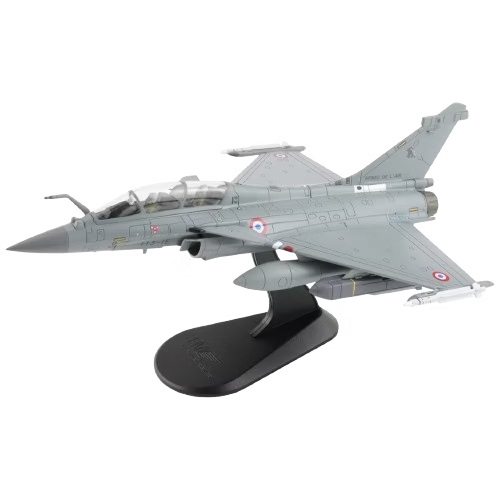
Let’s examine the evidence.
1. Aircraft specifications: Typhoon vs Rafale
Before examining their performance, it is worth comparing the fundamental engineering characteristics of both aircraft.
| Specification | Eurofighter Typhoon | Dassault Rafale |
|---|---|---|
| Country of Origin | UK, Germany, Italy, Spain | France |
| Manufacturer | Eurofighter consortium | Dassault Aviation |
| First Flight | 1994 | 1986 (technology demonstrator); 1991 (Rafale prototype) |
| Operational Service | 2003 | 2004 (Navy); 2006 (Air Force) |
| Engines | 2 × Eurojet EJ200 | 2 × Safran M88 |
| Maximum Speed | Up to Mach 2.0 (manufacturer figure) | Mach 1.8 |
| Length | 15.96 m | 15.30 m |
| Wingspan | 10.95–11.09 m | 10.90 m |
| Height | Approximately 5.3 m | 5.30 m |
| Maximum Take-Off Weight | Approximately 23.5 tonnes | 24.5 tonnes |
| Maximum External Payload | Configuration dependent | 9.5 tonnes |
| Service Ceiling | 55,000 ft | 50,000 ft |
| Maximum Load Factor | Configuration dependent | +9g / -3.2g |
| Crew | 1 or 2, depending on variant | 1 or 2, depending on variant |
Note: Specifications are representative published figures, not a direct comparison of identical aircraft configurations. Performance varies with altitude, aircraft variant, fuel, weapons and mission load. The Typhoon’s Mach 2 figure is its manufacturer’s published maximum; individual operator specifications can quote lower figures.
What do the specifications tell us?
The Typhoon has a higher published maximum speed and service ceiling. Its aerodynamic design and powerful EJ200 engines make it particularly well suited to high-performance air-defence missions.
The Rafale, meanwhile, has a slightly higher maximum take-off weight and an impressive published external payload capacity of 9.5 tonnes.
One interesting observation is that the two aircraft are remarkably similar in physical dimensions. Yet they achieve their capabilities through different aerodynamic arrangements and systems integration.
2. Engine performance and flight characteristics
Eurofighter Typhoon – Built for speed and agility
The Typhoon is powered by two Eurojet EJ200 engines, each producing approximately 90 kN of thrust with afterburner.
Its relatively lightweight airframe, combined with its powerful engines, gives it an excellent thrust-to-weight ratio.
The aircraft uses a delta wing and forward canards, together with a deliberately unstable aerodynamic design controlled by a sophisticated digital fly-by-wire flight-control system.
This arrangement provides excellent manoeuvrability, particularly during demanding air-combat manoeuvres.
The Typhoon is particularly impressive in:
- Rapid acceleration.
- High-altitude interception.
- Supersonic flight.
- High-energy manoeuvring.
- Air-superiority missions.
Dassault Rafale – Designed for versatility
The Rafale uses two Safran M88 turbofan engines, each producing approximately 75 kN of thrust with afterburner.
Like the Typhoon, it uses a delta-wing and canard configuration, providing excellent agility and aerodynamic performance.
However, the Rafale’s design also reflects its requirement to operate from both conventional airbases and aircraft carriers.
The naval Rafale M has reinforced landing gear, an arrestor hook and other structural modifications to withstand the demanding environment of carrier operations.
The Rafale is particularly impressive in:
- Multirole combat missions.
- Low-level penetration.
- Long-range strike operations.
- Carrier-based aviation.
- Missions requiring a combination of sensors and weapons.
Performance verdict: The Typhoon has the advantage in published maximum speed and altitude. Both aircraft are highly manoeuvrable, and neither can be declared the winner in a close-range engagement from specifications alone.
3. Radar, avionics and electronic warfare
Modern air combat is no longer simply about which aircraft flies faster or turns more tightly.
The ability to detect, identify, track and engage an opponent before being detected is increasingly important.
This is where radar, electronic warfare and sensor integration become critical.
Eurofighter Typhoon
The Typhoon’s radar development has progressed through successive generations.
Earlier aircraft use the mechanically scanned CAPTOR-M radar, while later upgrade programmes introduce the electronically scanned CAPTOR-E family, including AESA configurations.
AESA radar technology allows the aircraft to track multiple targets and perform sophisticated air-to-air and air-to-ground surveillance functions.
The aircraft also incorporates:
- PIRATE infrared search and track.
- Advanced defensive aids.
- Missile approach warning.
- Electronic countermeasures.
- Integrated mission systems.
The Typhoon’s sensor and weapons capabilities continue to develop through national upgrade programmes.
Dassault Rafale
The Rafale uses the Thales RBE2 AESA radar in its modern operational configurations.
One of its most important features is the SPECTRA electronic warfare system.
SPECTRA provides threat detection, identification, warning and electronic countermeasures against radar, infrared and laser-related threats.
The Rafale also incorporates:
- Front Sector Optronics.
- Integrated sensor fusion.
- Advanced electronic warfare.
- Modern tactical data links.
- Dedicated reconnaissance and targeting systems.
The aircraft’s integrated architecture is designed to combine information from multiple onboard and external sources, helping the pilot develop a clearer understanding of the tactical environment.
Technology verdict: Both aircraft possess sophisticated avionics. The Rafale has a particularly strong reputation for its integrated SPECTRA electronic warfare architecture, while the Typhoon continues to develop its radar and defensive systems through successive upgrades.
It is important to remember that the exact capabilities depend on the aircraft’s standard and operator.
4. Weapons: Which aircraft carries the greater firepower?
Both aircraft can carry a sophisticated combination of air-to-air and air-to-ground weapons.
Eurofighter Typhoon
The Typhoon’s weapons include:
Air-to-air
- MBDA Meteor.
- AIM-120 AMRAAM.
- ASRAAM.
- IRIS-T, depending on operator.
Air-to-ground
- Storm Shadow.
- Brimstone 2.
- Paveway IV.
- Other precision-guided weapons depending on national configuration.
It also carries an internal 27 mm Mauser cannon.
Dassault Rafale
The Rafale’s weapons include:
Air-to-air
- MBDA Meteor.
- MICA EM.
- MICA IR.
Air-to-ground and maritime
- SCALP-EG cruise missile.
- AASM Hammer precision-guided weapons.
- Laser-guided bombs.
- AM39 Exocet anti-ship missile.
It also carries an internal 30 mm GIAT 30 cannon.
The Meteor missile: A common advantage
An interesting feature of this comparison is that both aircraft can employ the MBDA Meteor beyond-visual-range air-to-air missile in appropriate operational configurations.
Meteor uses a ramjet propulsion system designed to maintain energy over a substantial portion of its flight.
This gives both aircraft access to one of Europe’s most advanced air-to-air missile systems.
However, possessing the same missile does not mean the aircraft have identical combat capability. Radar performance, electronic warfare, targeting information, aircraft positioning and pilot decisions all influence an engagement.
Weapons verdict: Both aircraft offer extensive weapons flexibility. The Rafale has a particularly broad range of integrated air, land and maritime strike options, while the Typhoon has an impressive air-defence and strike arsenal.
5. Operational history: Which aircraft has seen more action?
Specifications tell only part of the story. Operational experience provides another important measure of an aircraft’s maturity and versatility.
Eurofighter Typhoon – Operational experience
The Typhoon entered operational service with the Royal Air Force in 2003.
Its combat debut came during the 2011 military intervention in Libya, known as Operation Ellamy.
Since then, it has been involved in several important operations.
Operation Ellamy – Libya, 2011
RAF Typhoons participated in NATO operations over Libya, initially undertaking air-defence missions before also conducting ground-attack operations.
Operation Shader – Iraq and Syria
British Typhoons have participated in the international campaign against Islamic State, undertaking air patrols and precision strike missions.
Baltic Air Policing
Typhoons have supported NATO’s air-policing mission in the Baltic region, protecting allied airspace and responding to potential airspace violations.
Quick Reaction Alert
The aircraft remains central to the UK’s Quick Reaction Alert capability, providing rapid responses to potential threats to British airspace and the Falkland Islands.
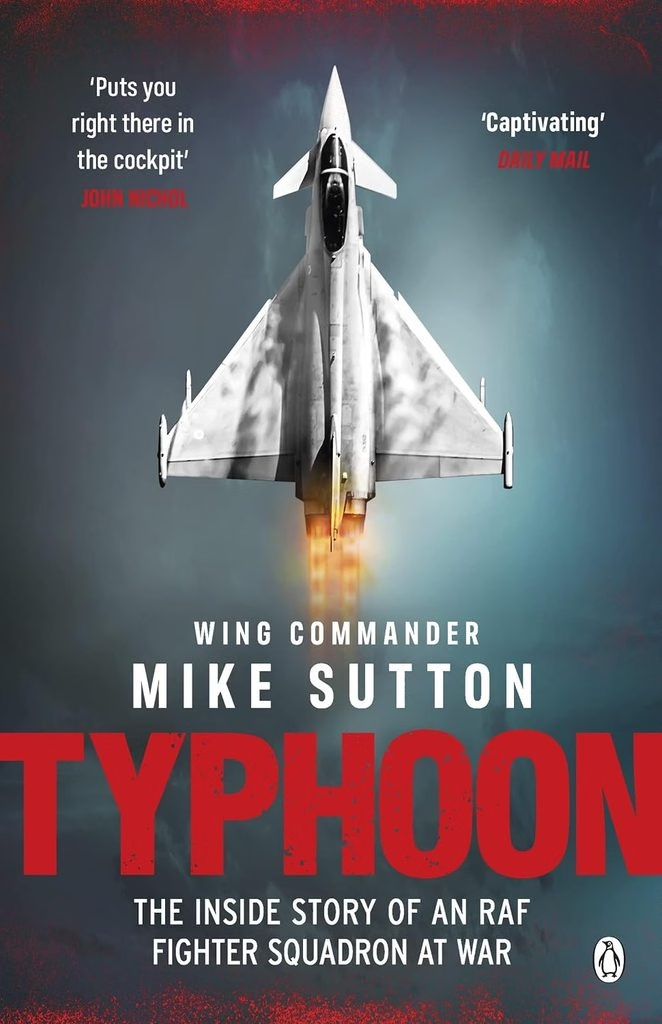
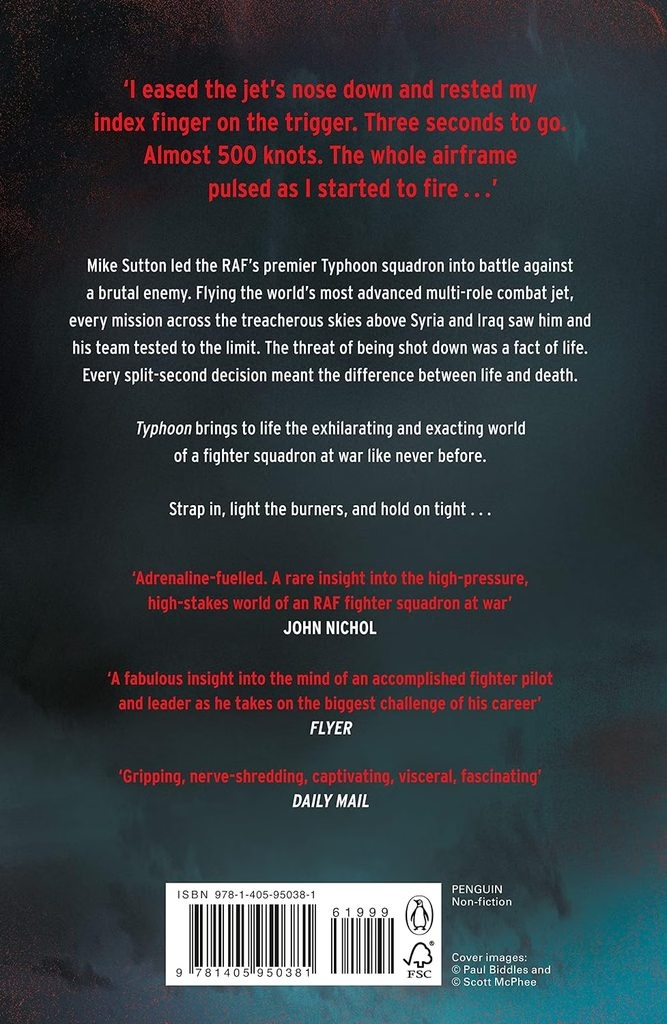
Typhoon by Mike Sutton
Mike Sutton led the RAF’s premier Typhoon squadron into battle against a brutal enemy. Flying the world’s most advanced multi-role combat jet, every mission across the treacherous skies above Syria and Iraq saw him and his team tested to the limit. The threat of being shot down was a fact of life. Every split-second decision meant the difference between life and death.
Dassault Rafale – Operational experience
The Rafale achieved its first combat experience in Afghanistan in 2007.
It has subsequently been deployed across several operational theatres.
Afghanistan – 2007 onwards
French Rafales undertook reconnaissance and precision strike missions in support of coalition operations.
Operation Harmattan – Libya, 2011
Rafales played an important role in French operations over Libya, demonstrating their ability to conduct air superiority and precision strike missions.
Operation Serval – Mali, 2013
French Rafales conducted long-range strike missions in support of French military operations in Mali.
Operation Chammal – Iraq and Syria
The Rafale has participated in operations against Islamic State, undertaking reconnaissance and strike missions.
Syria – 2018
French Rafales participated in the April 2018 strikes against Syrian chemical weapons-related facilities, employing SCALP cruise missiles.
Carrier operations
The naval Rafale M has also operated from France’s aircraft carrier, Charles de Gaulle, giving France an important additional operational capability.
Operational verdict: The Rafale has a broader publicly documented history of expeditionary combat missions across different theatres and mission types. The Typhoon has established a strong record in air defence, NATO air policing and combat operations. Neither aircraft’s operational history alone proves superiority in a future conflict.
6. An important difference: Aircraft carrier operations
One of the most interesting differences between these aircraft is their ability to operate from aircraft carriers.
The Rafale M was specifically developed for French naval aviation.
It operates from the Charles de Gaulle aircraft carrier and incorporates structural and landing-system modifications to support arrested carrier landings and catapult launches.
This provides France with the flexibility to deploy combat aircraft without depending entirely on overseas airbases.
The standard Eurofighter Typhoon, by contrast, is a land-based aircraft. It was not designed for conventional carrier operations.
This is a significant operational distinction.
Winner: Rafale. Its naval variant provides a capability that the Typhoon does not possess.
7. International exports and global influence
Aircraft performance is only one part of the defence market. Export success also depends on political relationships, industrial partnerships, training, maintenance and long-term support.
Eurofighter Typhoon
The Typhoon is operated by several European and Middle Eastern air forces.
Its multinational development programme provides a strong industrial foundation, with the UK, Germany, Italy and Spain sharing responsibility for the aircraft.
Major export customers include Austria, Saudi Arabia, Oman, Kuwait and Qatar.
Dassault Rafale
The Rafale has achieved considerable international success, with export customers including Egypt, Qatar, India, Greece, Croatia, Indonesia, the UAE and Serbia.
Its success demonstrates the attractiveness of a French-developed combat aircraft offering a combination of air-defence, strike, maritime and nuclear-deterrence capabilities.
Export verdict: Both programmes have achieved significant international success. Rafale has established a particularly strong export position in recent years, while Typhoon remains an important European and international defence programme.
8. Which aircraft is more expensive?
Comparing the purchase price of modern fighter aircraft is not straightforward.
The price of an aircraft depends on:
- Aircraft configuration and production standard.
- Number of aircraft ordered.
- Weapons and support equipment.
- Pilot and engineering training.
- Maintenance and logistics arrangements.
- Long-term support agreements.
- Infrastructure and industrial participation.
Consequently, a headline contract value cannot be directly compared with another country’s aircraft purchase price.
The real measure is the total cost of ownership over the aircraft’s operational life.
Both programmes involve substantial investment in upgrades, maintenance, training and future capability development.
For an air force, the cheapest aircraft to purchase is not necessarily the cheapest aircraft to operate.
9. The future: What comes next?
Neither aircraft is standing still.
The Typhoon programme continues to develop through radar improvements, weapons integration, electronic warfare upgrades and enhanced networking capabilities.
These improvements are particularly important as European air forces prepare for increasingly sophisticated threats.
The Rafale programme is also evolving through successive F4 standards and the planned F5 development pathway.
These developments focus on improved connectivity, sensor capabilities, survivability and the integration of future weapons.
Both aircraft are expected to remain important components of European air power while their respective nations develop next-generation combat aircraft programmes.
10. Final verdict: Typhoon or Rafale?
So, which aircraft is superior?
The answer depends on what you want the aircraft to achieve.
| Comparison | Advantage |
|---|---|
| Published maximum speed | Eurofighter Typhoon |
| Service ceiling | Eurofighter Typhoon |
| High-performance air defence design | Eurofighter Typhoon |
| Integrated electronic warfare architecture | Dassault Rafale |
| Carrier-based operations | Dassault Rafale |
| Published external payload | Dassault Rafale |
| Multirole mission flexibility | Both |
| Combat experience across varied theatres | Dassault Rafale |
| Modern air-to-air weapons | Both |
| Future development potential | Both |
The engineering conclusion
The Eurofighter Typhoon represents an outstanding example of European collaborative aerospace engineering. Its aerodynamic design, powerful engines and exceptional flight performance make it a formidable air-superiority platform.
The Dassault Rafale demonstrates a different approach: integrating multiple combat capabilities into a highly versatile aircraft that can operate from both land bases and aircraft carriers.
For an air force prioritising high-performance air defence and interception, the Typhoon is an extremely attractive platform.
For an air force seeking a versatile aircraft capable of performing a wide range of missions, including naval operations, the Rafale has compelling advantages.
Ultimately, both are among Europe’s most capable combat aircraft.
There is no universally superior fighter. The better aircraft is the one that best matches the mission, operational requirements, available weapons, support network and the air force operating it.
About EngineersRetreat
At EngineersRetreat, we explore the technology, engineering and innovation behind the machines that shape our world.
From advanced military aircraft and commercial aviation to engineering developments and aviation collectibles, discover the stories behind the technology.
Explore more aviation comparisons and engineering insights at EngineersRetreat.com